
Why live music makes all the difference at a ceremony
Why live music at a funeral, wedding or ceremony has more impact than a recording. About humanity, flexibility and the power of live sound.
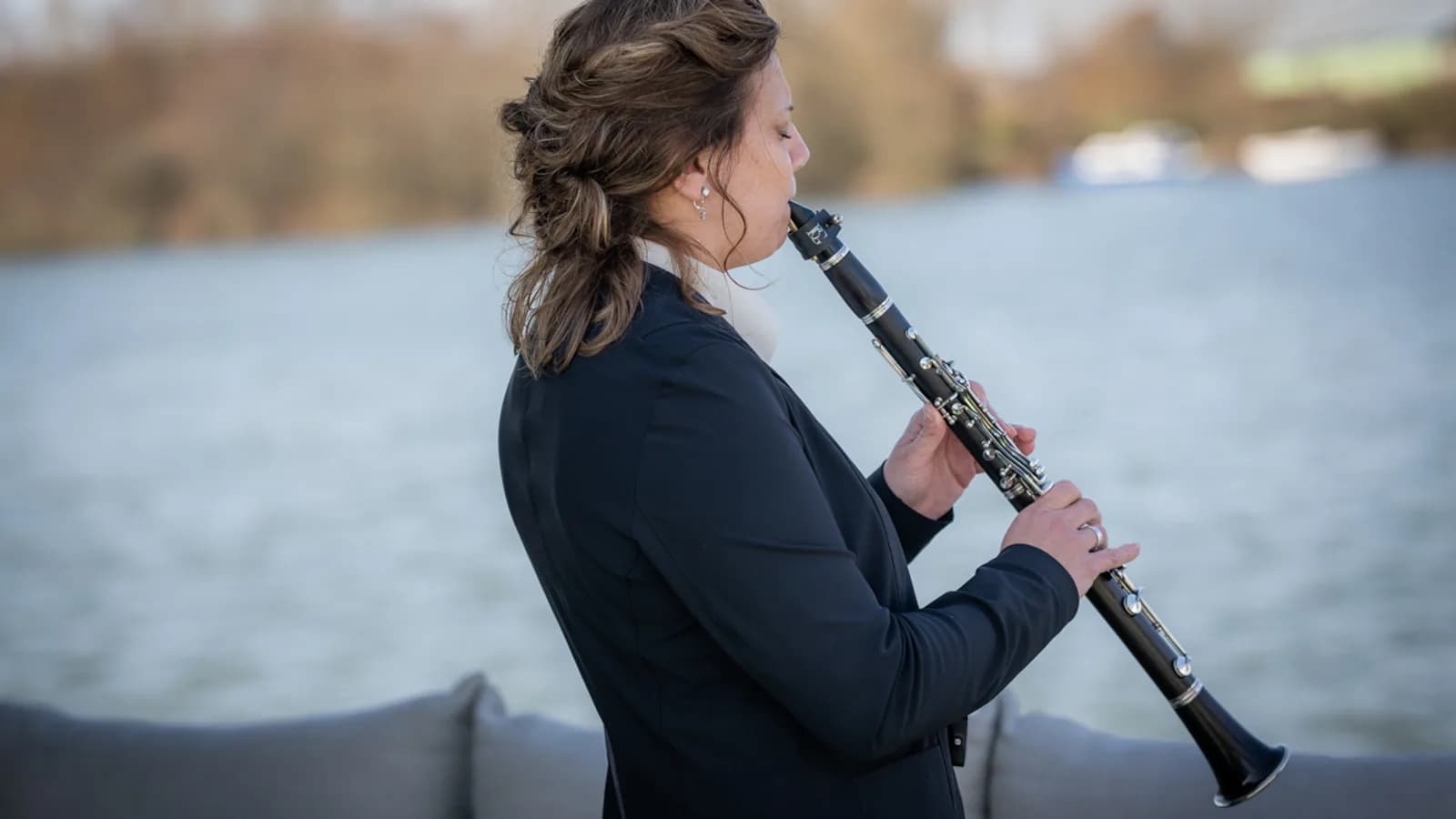
Please imagine: you are sitting in a church, an auditorium, or on the deck of a ship. Music is playing. But it's not a speaker sending the sound out into space. It's a human being, a musician standing in front of you, playing as if the world stood still for a moment. That difference between live music and a recording is greater than you think, and at ceremonies, where emotions run high, the effect is strongest.
The Scientific Difference
Research by the University of Zurich (2023) showed that live music has a significantly stronger effect on the autonomic nervous system than recorded music. Participants who listened to live music showed stronger physiological responses: more goosebumps, deeper breathing, and greater variation in heart rate. The researchers explain this by the social component: the presence of another human being playing music creates a connection that a speaker cannot match.
This effect is exactly what makes ceremonies so special. Whether it's a funeral, a wedding, or a memorial service: these are moments when we feel our humanity the most. Live music enhances that feeling.
Flexibility: moving with the moment
.The biggest practical difference is flexibility. A recording is fixed: the same tempo, the same volume, the same timing, every time. In a ceremony, that's a limitation.
Ceremonies rarely go exactly according to plan. A speaker talks longer than expected, a ritual lasts shorter, the emotion is greater than anticipated. A few examples of how live music plays into this:
- The casket arrives later than planned. A musician just plays on. With a recording, someone has to improvise with the remote control.
- A speaker breaks for a moment. The musician can sound a soft melody that fills the silence. A recording does nothing.
- The bride walks slower or faster than expected. The musician adjusts the tempo. A recording ends when it ends.
- The mood turns from sadness to gratitude. The musician can move with it. A recording stays in the same mood.
These adjustments are often subtle and unconscious, but the result is that the music feels like a participant in the ceremony, not a part.
The visual aspect
.Music you don't just hear, you see it. A musician playing, absorbed in the melody, moving with the instrument: that is an image that impresses. At a funeral, it is an image of devotion and respect. At a wedding, it is an image of celebration and elegance.
A survey by the British magazine Funeral Service Times (2024) found that 78% of the next of kin surveyed who opted for live music cited the visual aspect as one of the reasons it stuck with them. Not just the sound, but the presence of a human being fully engaged in the moment.
Breathing and sound
Bass instruments and the human voice have something in common: they are driven by breath. And breath is connected to emotion. How a musician breathes affects how the instrument sounds. In an intense moment, a clarinet or trumpet sounds different than in a light moment, not always consciously, but always perceptible.
Stringed instruments (violin, cello, guitar) and piano have a similar effect through the bow or touch: the musician's physical energy translates into sound. A pianist who is emotionally involved plays audibly differently than a pianist who performs a piece mechanically.
When recorded, that emotional layer is frozen in the moment of recording. With live music, that layer emerges anew, in the moment itself, influenced by what is happening in the room.
When is a recording better?
Honestly, a recording is sometimes the better choice. A few situations:
Specific voice or version. If the family necessarily wants to hear Andrea Bocelli's version, or the voice of the deceased himself, then a recording is the only option.
Complex arrangements.An orchestral work or a song with full band production sounds better from a good sound system than from a solo instrument.
Budget. Live music costs more than a playlist. If the budget is limited, a carefully curated playlist is a worthy option.
Personal preference. Some families are uncomfortable with the presence of a "stranger" at an intimate moment. That is completely understandable.
The Combination
The most beautiful ceremonies often combine live music with recordings. For example: live instrumental music at the walk-in and farewell moment, and a specific recording of a personal song in between. This way you get the best of both worlds: the flexibility and warmth of live music, and the recognizability of a specific performance.
Most funeral directors and master of ceremonies have experience with this combination and can help with the practical coordination.