
Music at a wedding ceremony: the complete guide
The complete guide to music at your wedding ceremony. From entry to exit: what songs fit each moment of your wedding?
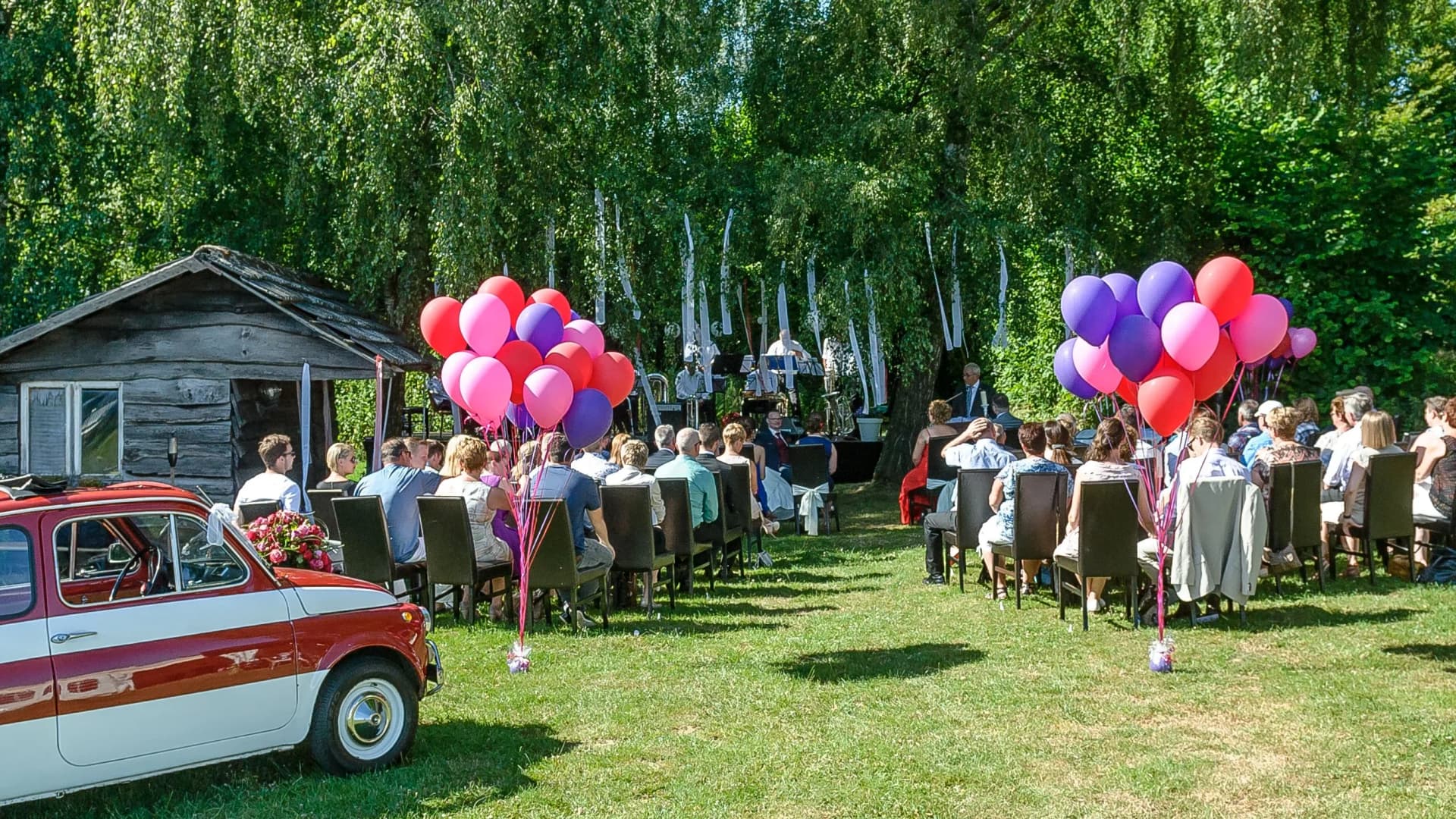
The music at your wedding ceremony largely determines the mood of the day. The right song at the entrance, a beautiful melody at the saying of yes, a festive piece at the walk-out: these are moments that will stay with you forever. This guide will help you choose music for each part.
The entry: the first big moment
.The entry of the bride (or the bride and groom together) sets the tone for the entire ceremony. The music should match the mood you're looking for: solemn, romantic, playful, or emotional.
Classical and solemn:
- Canon in D by Pachelbel: the most frequently chosen classic. The building chord progression gives the entry a natural rhythm.
- Trumpet Voluntary by Jeremiah Clarke: stately and festive, originally written as processional music.
- Ave Maria (Bach/Gounod): the majestic version, with a radiant melody befitting large spaces.
Romantic and modern:
- A Thousand Years by Christina Perri: now a modern classic at weddings. The melody is romantic without being overdone.
- Turning Page by Sleeping at Last: hushed and intimate, less known and therefore more surprising.
- Can't Help Falling in Love by Elvis Presley: as an instrumental arrangement timelessly romantic.
Tip:the tempo of the music should match the walking distance. A long aisle calls for a longer piece or repeat. A short aisle calls for a piece that gets to its core quickly. Live musicians adjust this automatically; when recording, it is wise to practice the timing in advance.
During the ceremony: connecting sounds
Between the vows, the vows and the rings, there are moments that call for music. Not as padding, but as deepening.
In rituals (unity candles, sand ceremony, wine ceremony): a hushed piece gives the ritual extra meaning. Méditation by Massenet, Pie Jesu by Fauré, or Spiegel im Spiegel by Pärt work well here.
During a moment of reflection: Ave Maria by Schubert (the more intimate version) suits both church and non-church ceremonies. The Adagio from Mozart's Clarinet Concerto is a less obvious but beautiful alternative.
After the vows: a short, light piece gives space to breathe for a moment before the yes follows. Fauré's Sicilienne or Tiersen's Comptine d'un autre été work as a gentle transition here.
The yes and the rings
At the anniversary itself, music does not necessarily have to be heard. Silence can be just as powerful here. But a soft melody in the background can make the moment more intense. In that case: very softly, almost whispering, so that the words take center stage.
After the saying of yes, the energy in the room changes. There is relief, joy, sometimes tears of happiness. That is the ideal time for a radiant, hopeful piece: Somewhere Over the Rainbow, What a Wonderful World, or Here Comes the Sun in an instrumental arrangement.
The walkout: leaving in celebration
.As a newlywed couple walking out of the venue may be festive. It is the moment when the mood turns from solemn to joyful.
Classical: Wedding March by Mendelssohn is the ultimate classic. Recognizable, festive, full of joy. The Allegro from Vivaldi's Spring Concerto is a fresher alternative.
Modern: All You Need Is Love by The Beatles works surprisingly well as an instrumental arrangement. Signed, Sealed, Delivered by Stevie Wonder is for couples who really want to make walking out a party. Happy by Pharrell Williams is an unconventional but popular choice.
The reception and dinner
.After the ceremony, music can also create atmosphere at the reception and dinner. Different rules apply here than at the ceremony:
Volume: background level. Guests should be able to talk without shouting.
Repertoire: a mix of jazz standards (Fly Me to the Moon, Autumn Leaves), movie themes (Cinema Paradiso, Moon River), and soft pop arrangements (Stand by Me, Unchained Melody).
Duration: 45 to 90 minutes of live music is usually enough. It's long enough to impress, short enough to stay special. After that, a playlist can take over.
Live music or playlist?
Both have their advantages. A quick comparison:
Live music: flexible, visually impressive, adapts to the moment. More expensive, but creates an unforgettable atmosphere. Popular choices: pianist, string quartet, harpist, clarinetist.
Popular choices: pianist, string quartet, harpist, clarinetist.
Playlist/DJ: exactly the song you want, unlimited repertoire, cheaper. Less flexible at unexpected times. Do make sure you have a good sound system.
Combination: Many couples choose live music at the ceremony and a DJ at the party. This gives the best of both worlds.
Many common mistakes
.- Choosing too many songs. Four to six musical moments is enough. More can make the ceremony unnecessarily long.
- Do not check lyrics. Some romantic-sounding songs have less romantic lyrics. Every Breath You Take sounds beautiful, but is about stalking. Always check the lyrics.
- Timing not practicing. When recording, timing is crucial. Practice the entry at least once on the song.
- Do not test sound system. Nothing more distracting than creaking speakers on your best day. Test the system at the venue, at the volume you need.