
Music at an ash scattering on the water
How live clarinet music makes an ash scattering on the water even more intimate and meaningful. Tips on music selection, acoustics and the ceremony.
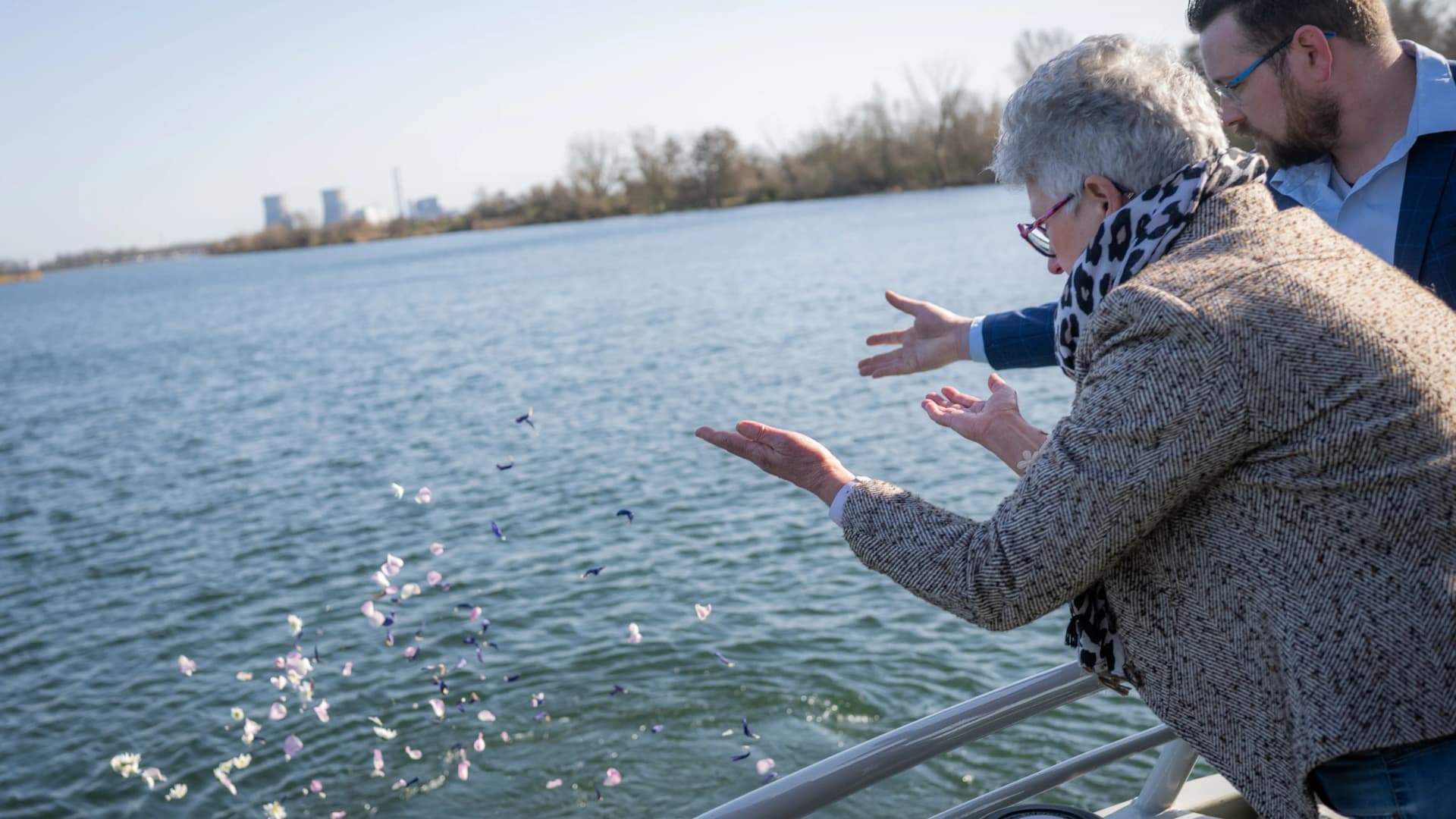
An ash scattering on the water is one of the most impressive forms of farewell. The combination of nature, movement and space gives the ceremony something that no church or auditorium can offer: the experience of literally letting go while the water picks up and carries the ashes.
More and more families are choosing music to accompany this moment. And that's understandable, because the silence on open water can be overwhelming. Music gives the moment structure and an emotional framework, without disturbing the intimacy.
How does an ash scattering take place on the water?
Although each ash scattering is unique, most follow a similar course:
Departure:the ship departs from a harbor or jetty, usually with a small party of ten to thirty people. During the cruise to the scattering site, there is time to unwind and be together.
The ceremony: Once at the chosen spot, the ship stops or sails slowly. Words are spoken, sometimes a poem is read, and then comes the moment of scattering. The ashes pass over the water, often accompanied by flowers.
After the scattering: the ship slowly sails a lap around the site, often using the ship's bell or horn as a final salute. This is followed by the return trip, which is often quieter and quieter.
The total duration is usually one and a half to two hours, depending on the sailing distance.
Acoustics on the water
.The acoustics on open water are unique and substantially different from an indoor space. Sound carries far across water, much farther than you might expect. This is due to the flat water surface that reflects sound waves rather than absorbing them.
For musical instruments, this means: the sound is clear and direct, without the echo of a church building or the dullness of an auditorium. A clarinet or violin sounds remarkably pure on water. The downside is that wind can carry the sound away. Experienced musicians take this into account by choosing positions with the wind at their backs.
An important detail: amplification is usually not necessary on the water with a small ensemble. The natural volume of an acoustic instrument carries far enough. That keeps the atmosphere intimate and casual.
What music suits an ash scattering?
For an ash scattering, pieces that exude space and openness are appropriate. The surroundings, the water, the sky, the horizon, require music that moves with that openness. A few suggestions:
Happy and light: Gabriel's Oboe by Morricone, Somewhere Over the Rainbow, What a Wonderful World. These pieces have a natural lightness that matches the openness of the water.
Silent and meditative: Adagio in G minor by Albinoni, Gnossienne No. 1 by Satie, Spiegel im Spiegel by Pärt. For families who want to keep the moment subdued.
Personal: a favorite song of the deceased in an instrumental arrangement. This makes the ceremony unique and recognizable.
Fauré's Sicilienne deserves special mention. The gently rocking rhythm of this piece is reminiscent of waves, making it an almost symbolic choice for a water ceremony.
When does the music sound?
There are roughly three times when music can sound:
During the outward journey: soft background music helps set the mood. People arrive, find their seats, get quiet. This is similar to walk-in music at a church service.
At the moment of scattering: this is the emotional climax. The music usually begins just before the ashes pass over the water and plays on as the ship makes a round trip. Next of kin almost always call this the moment that stuck with them the most afterwards.
During the sailing back: lighter music can transition from the formal farewell to the informal gathering. Some families choose to make the retreat in silence, and that is just as valuable.
Companies and collaboration
.In the Netherlands there are several shipping companies that specialize in ash scattering on water, such as Rederij Cascade, Asverstrooiing Noordzee, and smaller local providers. Most shipping companies are experienced in incorporating live music and can advise on logistics.
Practical tip: Discuss in advance with the shipping company where the musician can stand or sit. On a smaller ship, space is limited, and position determines how well the music carries. A spot at the front of the ship, facing the group, usually works best.
Alternatives to live music
.Not every ash scattering has live music, nor does it have to. Many ships have a music system on board on which you can play your own music. A carefully curated playlist can be just as valuable, provided the sound system is of sufficient quality.
The advantage of live music is its flexibility: the moment of scattering cannot be timed exactly, and a live musician adapts. With a recording, you have to plan more and hope that the timing is right.