
How do you choose the right music for a memorial service?
Practical tips for choosing music at a memorial service. From walk-in music to the farewell moment: here's how to put together the perfect program.
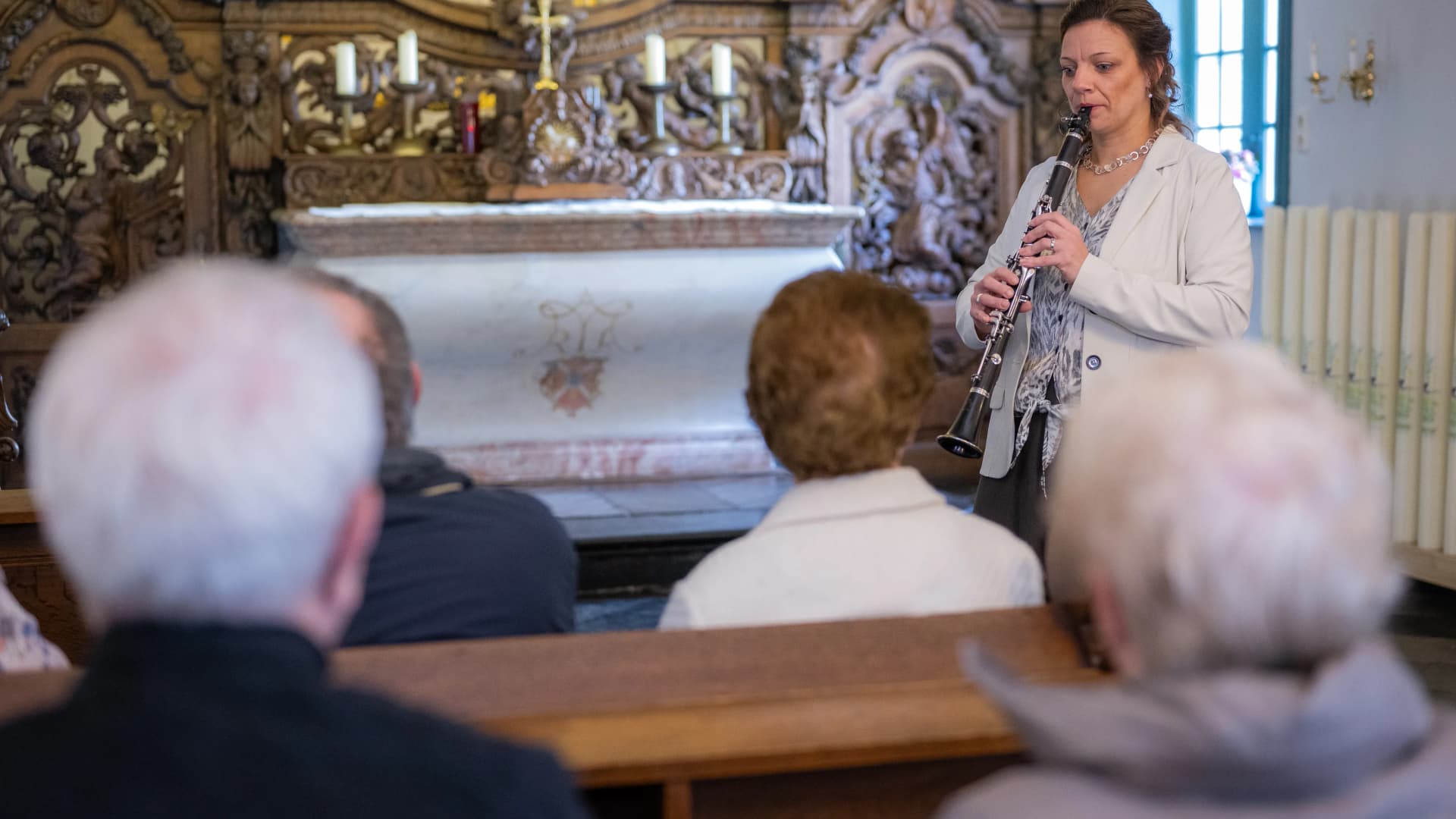
Choosing music for a memorial service or funeral. It's one of those tasks that comes your way at a time when your head and heart are already full. What music fits the farewell? What would the deceased have wanted? What feels right to the bereaved? This article offers a practical framework to make that choice easier.
Start with the deceased, not a top 10
The temptation is to google a "funeral music top 10" and pick something from it. But the main question is not "what music is common at a funeral?" The most important question is: who was this person?
Music at a memorial service is a resounding portrait. Think about the music the deceased loved to listen to. Was it someone who listened to classical music every Sunday? Or conversely, someone who always had the radio on? Did the deceased have a favorite song, one that was always sung along?"
Practical tips for finding out:
Check the deceased's Spotify or music library. The most-listened-to songs tell a lot about someone's taste in music.
Question family members and friends. Often they know songs that evoke special memories: the song that was always in the car, the song that accompanied a vacation, the music that always sounded at Christmas.
Think about character. Was the deceased subdued and classical? Or exuberant and quirky? The music may reflect that character. A service with only hushed classical music does not feel appropriate for someone who celebrated life with loud laughter and hearty rock.
Construction: four moments, four atmospheres
.A memorial service usually has four musical moments, each with its own character. That structure helps to structure the emotional journey of the service:
1. The walk-in (5-15 minutes)
Guests come in and take their seats. Music helps make the transition from outside to inside, from everyday life to the moment of farewell. Choose quiet, instrumental music here without too much dynamics. Pieces like the Gymnopédie No. 1 by Satie, Clair de Lune by Debussy, or a gentle arrangement of a personal favorite work well.
2. During the ceremony (2-3 pieces)
In between speakers, at rituals such as lighting candles, or during a moment of silence. Here there is more room for expressive music. Ave Maria, Gabriel's Oboe, Pie Jesu, or a pop arrangement of a song with personal meaning.
3. The farewell moment
The carrying out of the casket, the closing of the curtain, the last moment together. This is the emotional climax. Choose the piece here that says the most. The Adagio by Albinoni, Nimrod by Elgar, Time to Say Goodbye, or just that one personal song that makes everyone quiet.
4. The walkout
People leave the room. The music makes the bridge to the condolence. A slightly lighter, more hopeful piece helps with that transition: What a Wonderful World, Somewhere Over the Rainbow, or You'll Never Walk Alone.
How many songs do you need?
An average funeral or memorial service lasts 45 to 60 minutes. Allow for three to five musical moments. That is enough to give structure to the service without letting the music dominate.
A frequently chosen format:
- 1 piece at the walk-in
- 1-2 pieces during the ceremony
- 1 piece at the farewell moment
- 1 piece at the walk-out
At longer services or services with many speakers, an extra musical moment in between can be welcome. It gives listeners a break and an opportunity to process what has been said.
Classical, pop or something else?
Anything is possible and anything goes. There are no rules for music at a funeral. A few considerations:
Classical music (Ave Maria, Adagio by Barber, Air by Bach) is timeless and always works. The advantage: it evokes no specific associations and suits any outlook on life.
Pop music (Hallelujah, My Way, Roller Coaster) is more personal and recognizable. The advantage: it immediately evokes memories. The disadvantage: it may have too strong an association for some guests that distracts from the moment.
Instrumental versions of pop music combine the best of both: the recognizability of a beloved song, without the lyrics that can distract attention. Many pop standards can be beautifully arranged for piano, clarinet, violin or cello.
Religious music (Amazing Grace, Abide with Me, church hymns) suits services of a religious nature. Consult with the pastor if there are requests or restrictions.
Tips for talking with the musician
.If you engage a live musician, a brief preparation conversation is common. Make that conversation easier with this preparation:
- Write down what songs the deceased liked to listen to .
- State what mood you are looking for (comforting, hopeful, celebratory, or a mix)
- Discuss whether there are specific moments you want to mark with music
- Inquire if a special request is feasible (most musicians can rehearse a new piece on short notice)
- Let the musician make suggestions as well; they know their repertoire and know what works
Most funeral musicians are used to short timelines and emotional context. You don't have to be afraid to admit you don't know. That's precisely when they can help best.